Slide 0
Slide 1
Slide 2
Slide 3
Slide 4
Slide 5

CHRIST, THE SECOND ADAM

1 Corinthians 15:22 (RSV)

“For as in Adam all die, so also in Christ shall all be made alive.”

By Nzioka Victor Katua

Acknowledgment

With deepest gratitude to Jesus Christ, the Holy Spirit, the wisdom of Scripture and the Church Fathers, my family, friends, and all true seekers—this work is dedicated to the glory of God and the transformation of hearts.

First and foremost, I bow my heart in gratitude to the Lord Jesus Christ, the Living Word, who is the true inspiration behind every page of this book. Without His grace, guidance, and Spirit, these words would remain lifeless. To Him belongs all glory, honor, and praise forever.

I also acknowledge the Holy Spirit, the divine Teacher, who opens the Scriptures and reveals hidden mysteries to those who hunger and thirst for righteousness. Every insight here is a gift of His gentle illumination.

I am indebted to the sacred authors of the Holy Scriptures, and to the wisdom of the early Church Fathers—Augustine, Tertullian, Justin Martyr, and others—whose voices continue to echo across the centuries, reminding us that the Gospel is ever-living and ever-new.

My heartfelt thanks go to my family, friends and ChatGPT,DeepSeek, who encouraged me, prayed for me, and patiently supported me throughout this journey of writing.

Finally, I dedicate this book to all true seekers—those who long not merely for knowledge, but for transformation; those who yearn for the hidden treasures of the Kingdom. May these words draw you nearer to Christ, the Tree of Life, and to the eternal embrace of His love.

Introduction

The Bible is full of symbols that point to Christ, hidden truths revealed only to seekers of the Kingdom. Adam represents our fall, while Christ, the Second Adam, brings new life. From the rib, the tree, and the serpent, every detail leads back to Christ. This book invites reflection — not to argue, but to awaken the heart to Him who is the Way, the Truth, and the Life.

Jesus Himself taught that the Kingdom is hidden, revealed only to those who seek with hunger and humility:

“To you it has been given to know the secrets of the kingdom of heaven, but to them it has not been given.” — Matthew 13:11, RSV

This book is written for true seekers — for those who are not satisfied with surface knowledge, but long to enter the mysteries of God. The Bible is full of symbols, and each one carries a message that points to Christ. What may seem like a simple story often hides a deeper truth, waiting to be discovered by the heart that listens.

The story of Adam is not just about the first man. It is about all of us. In Adam, we see our weakness, our mortality, and our fall. Yet God did not leave us there. In Christ, the Second Adam, we are offered new life, eternal life.

The Apostle Paul reveals this truth in simple but powerful words:

“For as in Adam all die, so also in Christ shall all be made alive.”— 1 Corinthians 15:22, RSV

This verse is the heart of the message. Adam represents the beginning of human life, but also the entrance of sin and death. Christ represents the beginning of new life, a life that overcomes death. The first Adam is of the earth; the Second Adam is from heaven.

The rib taken from Adam’s side becomes a picture of the Church drawn from Christ’s side. The tree in Eden reflects the tree of the Cross. The serpent who deceived points to the power of sin, while the promised Seed points to the Savior who would destroy it. Nothing in Scripture is wasted — everything carries a meaning that leads us back to Christ.

This book is a journey through these symbols. It is not written for argument, but for reflection. Not to fill the mind with theories, but to awaken the heart to the reality of Christ as the Second Adam. If you are a seeker of the Kingdom of Heaven, may these words draw you closer to Him who is the Way, the Truth, and the Life.

Adam as a Symbol

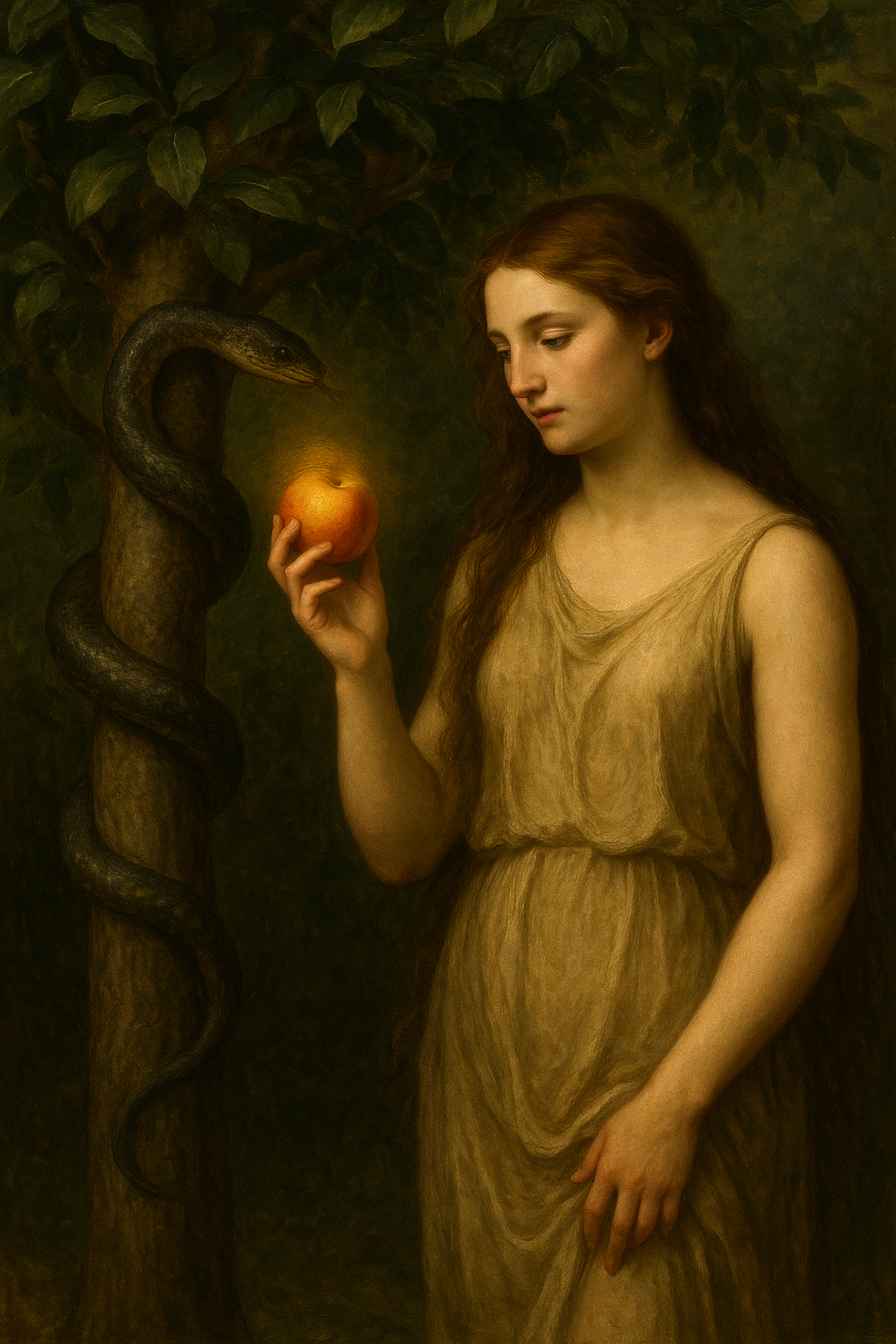
Adam’s story reveals humanity’s fragile nature—formed from dust yet filled with God’s breath—while the serpent’s deception unveils the roots of sin and death.

When we open the Bible, the first man we encounter is Adam . His very name in Hebrew means “man.” Adam is not only the first human being but also a mirror of all humanity. His story is not simply his own; it is our story too.

Scripture tells us:

“Then the Lord God formed man of dust from the ground, and breathed into his nostrils the breath of life; and man became a living being.” — Genesis 2:7, RSV

Here already lies a great mystery. Man is made of dust and breath. Dust speaks of our weakness, our fragility, and our end. Breath speaks of God’s gift, His Spirit placed within us. Dust returns to the earth, but the breath belongs to God. In Adam, we see the tension of our lives: weak as clay, yet carrying the breath of eternity.

Adam was placed in a garden of delight — Eden — where he walked in fellowship with God. He was entrusted with work: the care of creation, and the joy of naming the creatures. Yet he was also given a command, a holy boundary: not to eat from the tree of the knowledge of good and evil . This command was not a burden but a test of love and obedience.

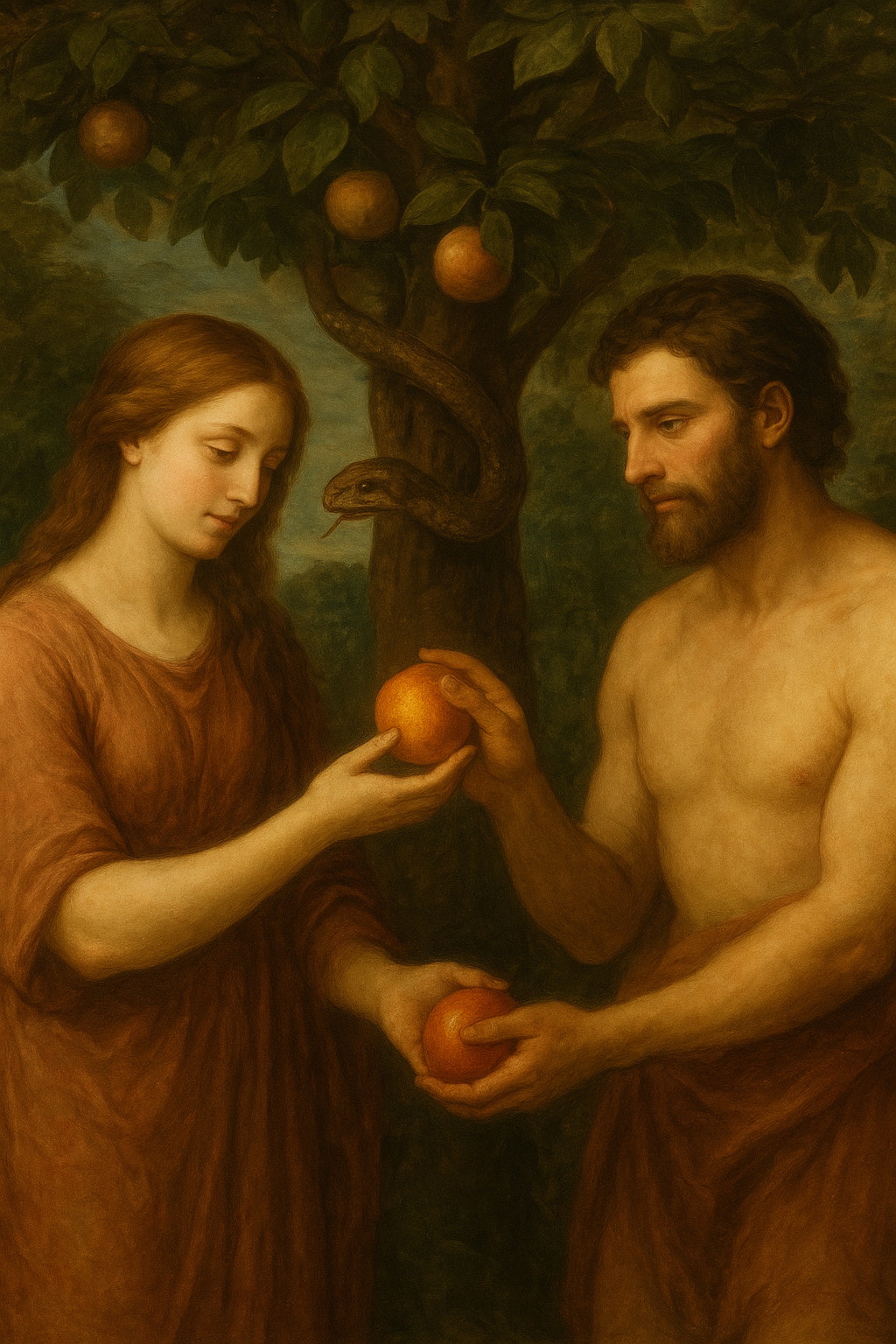
But when the serpent came, deception entered. Eve listened, Adam followed, and the first disobedience opened the door for death. The Scriptures declare:

“Therefore as sin came into the world through one man and death through sin, and so death spread to all men because all men sinned.”— Romans 5:12, RSV

The Snake as Symbol

The serpent in Eden is more than an animal. It is a symbol that carries deep spiritual meaning:

Deceiver / Satan

The serpent represents Satan, later revealed in Revelation as “that ancient serpent, who is called the Devil and Satan” (Revelation 12:9). His greatest weapon is deception — twisting God’s words, sowing doubt, and offering half-truths that sound attractive but lead to ruin.

Subtlety & Manipulation

The serpent is described as “more crafty than any other beast” (Genesis 3:1).

This shows the nature of temptation: it often appears harmless, logical, or even good at first, while hiding its poison.

Rebellion Against God’s Order

Notice the serpent spoke first to Eve, not to Adam. This is not a sign of Eve’s weakness, but of Satan’s rebellion. He attacked God’s design by disrupting order, sowing division, and undermining trust.

Rebellion Against God’s Order

Eve was deceived. As Paul later wrote: “Adam was not deceived, but the woman was deceived and became a transgressor” (1 Timothy 2:14). She believed the serpent’s lie — that the fruit would give her wisdom like God

Adam was not deceived. He chose knowingly. Out of love for Eve, or out of rebellion against God, he preferred unity with her over obedience to the Creator

Symbolism: Humanity fell through a double wound — the deception of the heart, and the willful rebellion of the will.

Deeper Symbolism

The Fruit = Autonomy from God

The temptation was never about food. It was about independence: being like God without God.

It represents the root of all sin — pride, self-rule, and the refusal to remain under the Creator’s authority.

Eyes Opened = False Enlightenment

After eating, their eyes were opened — but not to glory, only to shame. This symbolizes the counterfeit ―wisdom‖ of sin. It promises freedom but delivers bondage, promising light but plunging into darkness.

The Snake Crawling = Fallen Power

God cursed the serpent to crawl and eat dust (Genesis 3:14).

This symbolizes Satan’s ultimate humiliation. Once exalted, he is cast down, defeated, and destined for destruction.

Through Adam, sin and death entered the world. His fall was not only his; it became ours. His weakness is the weakness of all mankind. His disobedience reflects our own hearts. His death is the death we all inherit.In Adam, all die .

And yet, even in this fall, God whispered a promise. To the serpent He declared:

“I will put enmity between you and the woman, and between your seed and her seed; he shall bruise your head, and you shall bruise his heel.”— Genesis 3:15, RSV

This is the first prophecy of Christ — the Seed of the woman who would one day crush the serpent’s head. Even as judgment was spoken, redemption was promised.

The Fathers of the Church

The early Church Fathers looked at Adam not merely as history, but as prophecy. In him, they saw a foreshadowing of Christ.

Augustine (4th century) taught that Eve, taken from Adam’s rib, symbolized the Church taken from Christ’s side. Just as Eve was built from Adam’s rib, the Church is built from Christ’s sacrifice. When Christ’s side was pierced on the cross, blood and water flowed — signs of baptism and communion, by which the Church is given life.

Tertullian (2nd century) drew the parallel even more clearly: Adam’s deep sleep foreshadowed Christ’s death; Adam’s side being opened pointed to Christ’s pierced side; and Eve’s creation symbolized the birth of the Church. In Adam’s sleep, the bride was formed. In Christ’s death, His Bride, the Church, was born.

Adam is therefore more than history. He is a living symbol. He reveals both the greatness of man — made in God’s image — and the tragedy of man, fallen through disobedience. But above all, Adam points us to the One who would come after him: the Second Adam, Christ — who does not fall asleep in failure, but lays down His life in victory.

In Adam we see our beginning, but in Christ we see our new beginning. Adam shows us our need; Christ shows us our hope. Adam reminds us of death; Christ brings us to life.

The journey of this book begins here: with Adam, the first man, whose shadow stretches across all humanity. Yet that shadow prepares us for the greater Light — Christ, the Second Adam, in whom all things are restored.

The Rib and the Bride

Eve from Adam’s side foreshadows the Church from Christ’s pierced side, revealing the mystery of the Bride born through sacrifice, blood, and water.

When the Lord saw that it was not good for Adam to be alone, He caused a deep sleep to fall upon the man. From his side He took a rib and fashioned it into the woman, Eve, the companion and helper suitable for him. Scripture tells us:

“So the Lord God caused a deep sleep to fall upon the man, and while he slept took one of his ribs and closed up its place with flesh; and the rib which the Lord God had taken from the man he made into a woman and brought her to the man.” — Genesis 2:21–22, RSV

This moment was not just the creation of the first marriage; it was prophecy in action. God was planting a symbol that would only be fully revealed in Christ.

For just as Adam’s bride was taken from his side, so also Christ’s Bride — the Church — was born from His side. On the cross, the true Adam fell into the sleep of death. And when His side was pierced, blood and water flowed out (John 19:34). The Fathers of the Church saw in this moment the mystical birth of the Bride of Christ.

Tertullian (2nd century) perceived this clearly: Adam’s sleep foreshadowed Christ’s death; Adam’s opened side foreshadowed Christ’s pierced side; Eve’s creation foreshadowed the Church’s birth. From the sacrifice of the First Adam came the first bride, and from the sacrifice of the Second Adam comes the eternal Bride.

Augustine (4th century) echoed this truth with holy wonder. Just as Eve was ―built‖ from the rib of Adam, so too the Church is ―built‖ from the sacrifice of Christ. The rib symbolizes what is near to the heart, hidden yet precious — and so the Church is drawn from the very heart of Jesus, washed in His blood, made alive in His Spirit.

The blood and water flowing from Christ’s side were not random details. They were divine signs:

Blood = forgiveness and cleansing (Eucharist).

Water = baptism and new birth.

Here we see the sacraments by which the Bride is continually nourished. The Eucharist gives her life through the Blood of Christ; Baptism gives her birth through the water of the Spirit.

And just as Eve was joined to Adam in one flesh, so also the Church is joined to Christ in an eternal covenant of love. Scripture declares:

“Therefore a man shall leave his father and mother and hold fast to his wife, and they shall become one flesh.” — Genesis 2:24, RSV

Paul, under the Spirit, takes this further:

“This mystery is profound, and I am saying that it refers to Christ and the Church.” — Ephesians 5:31–32, RSV

Thus, marriage itself — beginning with the rib in Eden — was always meant to point beyond itself, to the eternal union of Christ and His people. Union of marriage is the shadow; union of Christ and the Church is the substance.

When Adam beheld Eve, he declared with joy:

“This at last is bone of my bones and flesh of my flesh.” — Genesis 2:23, RSV

In the same way, Christ looks upon His Church — weak, imperfect, but redeemed — and calls her His own. He nourishes her, sanctifies her, and prepares her as a spotless Bride for the great wedding feast of the Lamb (Revelation 19:7).

Thus, the rib and the Bride unveil a sacred pattern: from death comes life, from sacrifice comes union, from the pierced side of the Second Adam comes the everlasting fellowship of Christ and His people.

The Tree and the Cross

The Tree of Life lost in Eden is restored in the Cross of Christ: where Adam fell by a tree, Jesus triumphed by the Tree of Calvary, turning death into life and curse into blessing.

In the beginning, God planted a garden in Eden, and at its heart stood two trees: the Tree of Life and the Tree of the Knowledge of Good and Evil (Genesis 2:9). One promised eternal life, the other brought death if eaten. Man was created to live forever by feeding on the Tree of Life, but when Adam and Eve stretched out their hand to the forbidden tree, sin entered the world, and death through sin.

From that moment, the human story was marked by exile. The way to the Tree of Life was closed, guarded by a flaming sword (Genesis 3:24). Humanity was left with the bitter fruit of disobedience, and every man and woman born thereafter would walk the path of death.

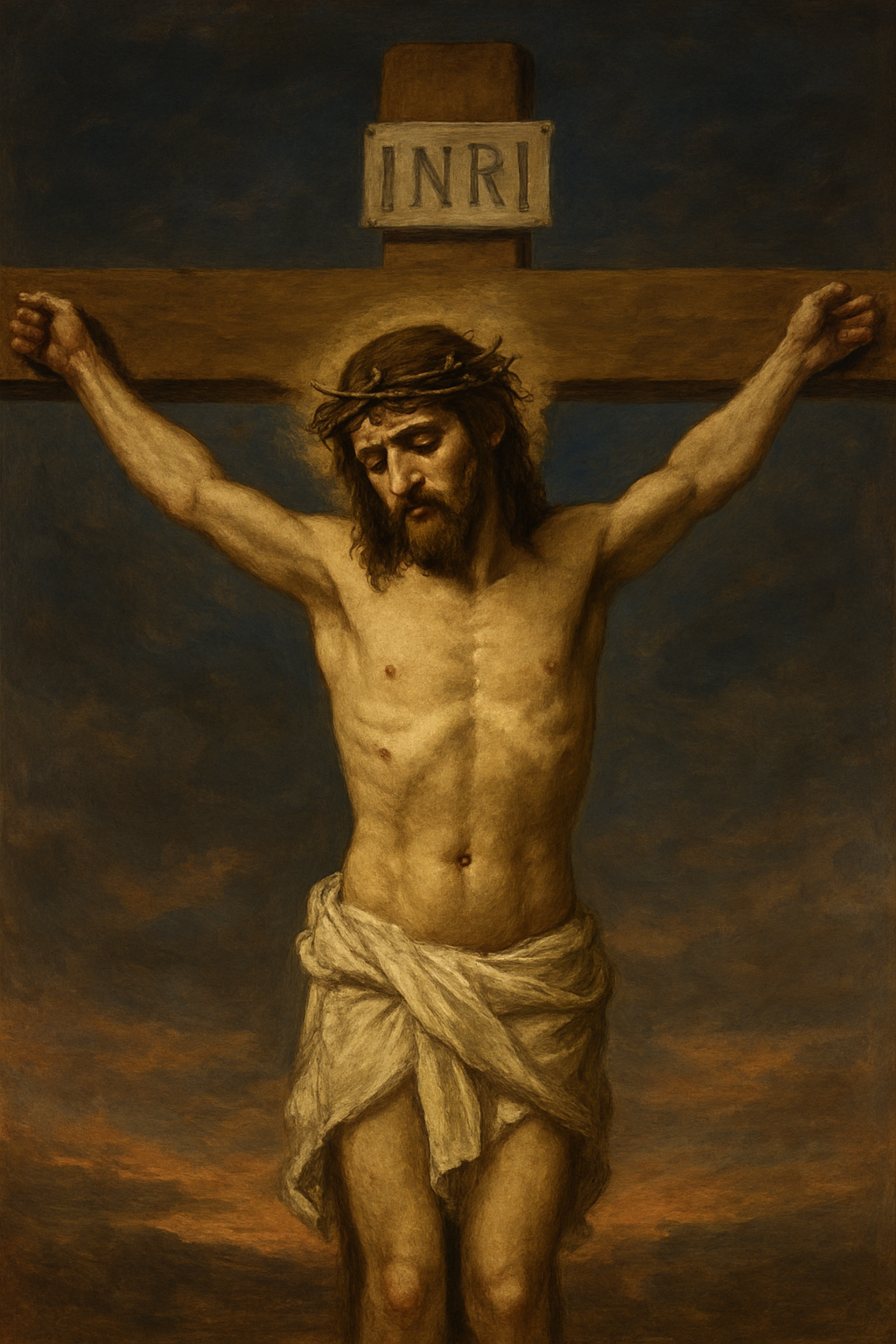
Yet God, in His mercy, had already prepared another Tree — hidden through the ages, but revealed in Christ. The Cross of Calvary is the new Tree of Life. What Adam lost in Eden, Christ restored on Golgotha.

On the first tree, man reached upward in pride and fell into ruin.

On the second tree, Christ was lifted up in humility and opened the way to salvation.

On the first tree, the fruit looked pleasant but brought death.

On the Cross, the fruit is Christ Himself, broken and poured out, giving eternal life.

The Church Fathers saw this mystery clearly. Irenaeus (2nd century) wrote that Christ ―recapitulated‖ Adam’s story — where Adam fell by a tree, Christ conquered by a tree. What had been the instrument of curse became the instrument of blessing.

Paul declares this boldly:“Christ redeemed us from the curse of the law by becoming a curse for us—for it is written, 'Cursed is everyone who is hanged on a tree.'” — Galatians 3:13

By hanging on the wood of the Cross, Jesus bore the curse that fell on Adam and all his children. He turned the symbol of death into the very doorway of life.

The Cross is now the tree from which the faithful feed. In the Eucharist, the fruit of this Tree is offered — Christ’s own Body and Blood. Just as eating the forbidden fruit brought death, so eating the holy fruit brings life everlasting:

“Whoever eats my flesh and drinks my blood has eternal life, and I will raise him up on the last day.” — John 6:54

Thus, the whole story of Scripture circles back to the Tree. What began in Eden ends in the New Jerusalem;

In the final vision of Scripture, John is carried to behold the River of the Water of Life, flowing clear as crystal from the throne of God and of the Lamb. Beside it grows the Tree of Life, that ancient Tree once guarded in Eden, now restored to the redeemed in the New Jerusalem. John writes:

“On either side of the river, the tree of life with its twelve kinds of fruit, yielding its fruit each month; and the leaves of the tree were for the healing of the nations.” (Revelation 22:2)

This is no ordinary tree. It is a vision of Christ Himself, the true source of eternal life. From Him flows a fullness beyond measure, for “in Him was life, and the life was the light of men” (John 1:4).

The twelve kinds of fruit symbolize the completeness and perfection of His provision — just as there were twelve tribes of Israel and twelve apostles of the Lamb, so here the number twelve reveals the fullness of God’s grace, every gift and every virtue needed for eternal life. Unlike the trees of this world that bear one fruit in one season, this Tree bears all fruits in all seasons, a picture of abundance without lack.

Each ―month‖ symbolizes continuity and eternal freshness — God’s gifts never run out, they are always new. There is no barrenness, no delay, no hunger. Eternity is not empty stillness, but a ceaseless flowing of life from God to His people — ever fresh, ever satisfying.

The vision continues: “the leaves of the tree were for the healing of the nations.” Nations here = the redeemed people from all over the world (cf. Revelation 7:9). The ―leaves‖ symbolize the outward signs of God’s mercy that touch all peoples, reaching every tribe, tongue, and land. And this healing does not mean curing sickness (for “in heaven there is no more death, nor sorrow, nor pain”, Revelation 21:4). Instead, it means restoration and wholeness. The wounds of sin, division, and exile that tore humanity apart will be forever mended in Christ.

Thus the Tree of Life stands as the eternal counterpart of the Cross. At Calvary, the wood of death became the wood of salvation. In Revelation, the Tree of Life is the final fruit of that Cross — uniting all peoples, renewing creation, and feeding the redeemed with the fullness of Christ forever. In Christ, the Tree of Life is no longer forbidden. Its fruit is freely given, its leaves bring healing, and its roots reach into eternity

So when we look upon the Cross, we should not see only the agony of death, but also the hidden glory: the Tree of Redemption. From its wood flows forgiveness; from its fruit springs eternal life; from its shadow we find shelter.

The tree in Eden cast us out; the Tree of Calvary brings us home.

The Cross as the Human Form

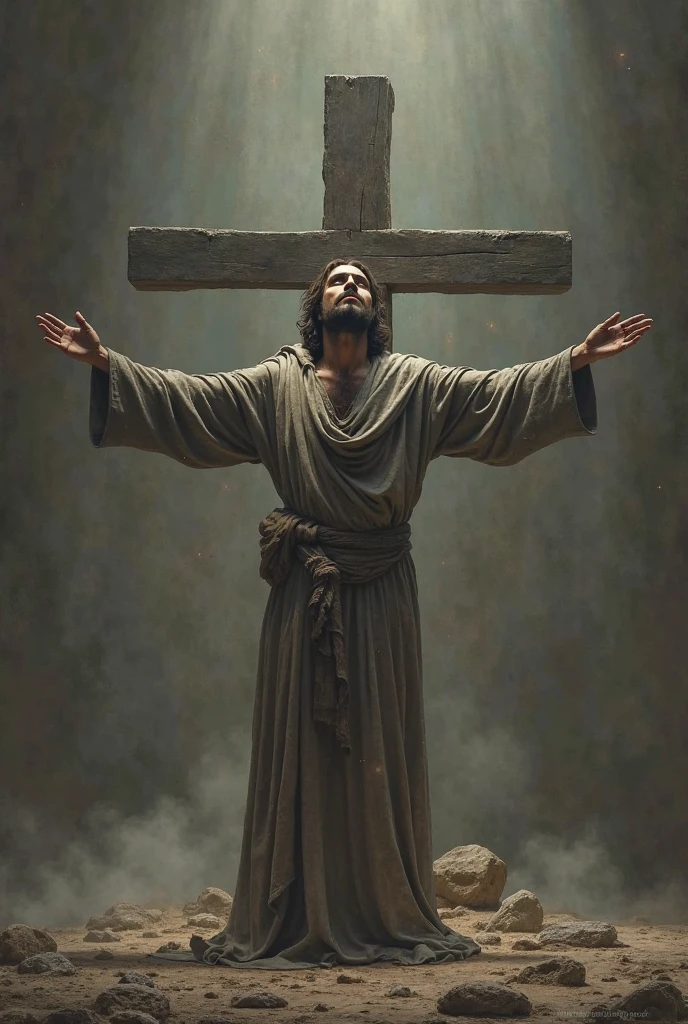
The human body itself reflects the cross: arms outstretched and feet joined form its shape, with the heart at the center where love unites heaven, earth, and humanity. This shows that the cross—and love—are written into our very being by God’s design.

When a person stretches out their arms and joins their feet, they literally ―become a cross.

Early Christians, such as Justin Martyr in the 2nd century, even wrote that the human body itself bears the mark of the cross because of this. To them, this was not a coincidence, but a revelation: the cross is written into creation itself—into the human body. Humanity, made in the image of God, carries within its very form the sign of redemption.

Thus, every man and woman is a living signpost of the Cross. Even before Christ’s crucifixion, the Creator had inscribed the shadow of salvation into the frame of His creatures.

The Heart at the Center

At the center of this form lies the heart. The intersection of the vertical beam (heaven ↔ earth) and the horizontal beam (humanity ↔ humanity) is exactly at the chest — the heart.

This is profoundly symbolic:

The vertical beam represents our relationship with God.

The horizontal beam represents our relationship with others.

Both meet at the heart, where love must dwell.

Jesus’ sacrifice was precisely an act of perfect love — love for the Father above, and love for us, His brothers and sisters. When His arms were outstretched on the wood, He embraced the world. When His body was lifted upward, He reconciled us with the Father. And at the heart of it all was love poured out.

Not a Coincidence but Providence

In God’s design, nothing is random. The fact that the cross resembles the human form, with the heart at the center, reveals something astonishing:

The cross is the image of love written into our very being.

Christ’s heart, pierced on the cross, became the source of life — as “blood and water flowed”(John 19:34).

The cross proclaims that the path to God is through the heart of Christ.

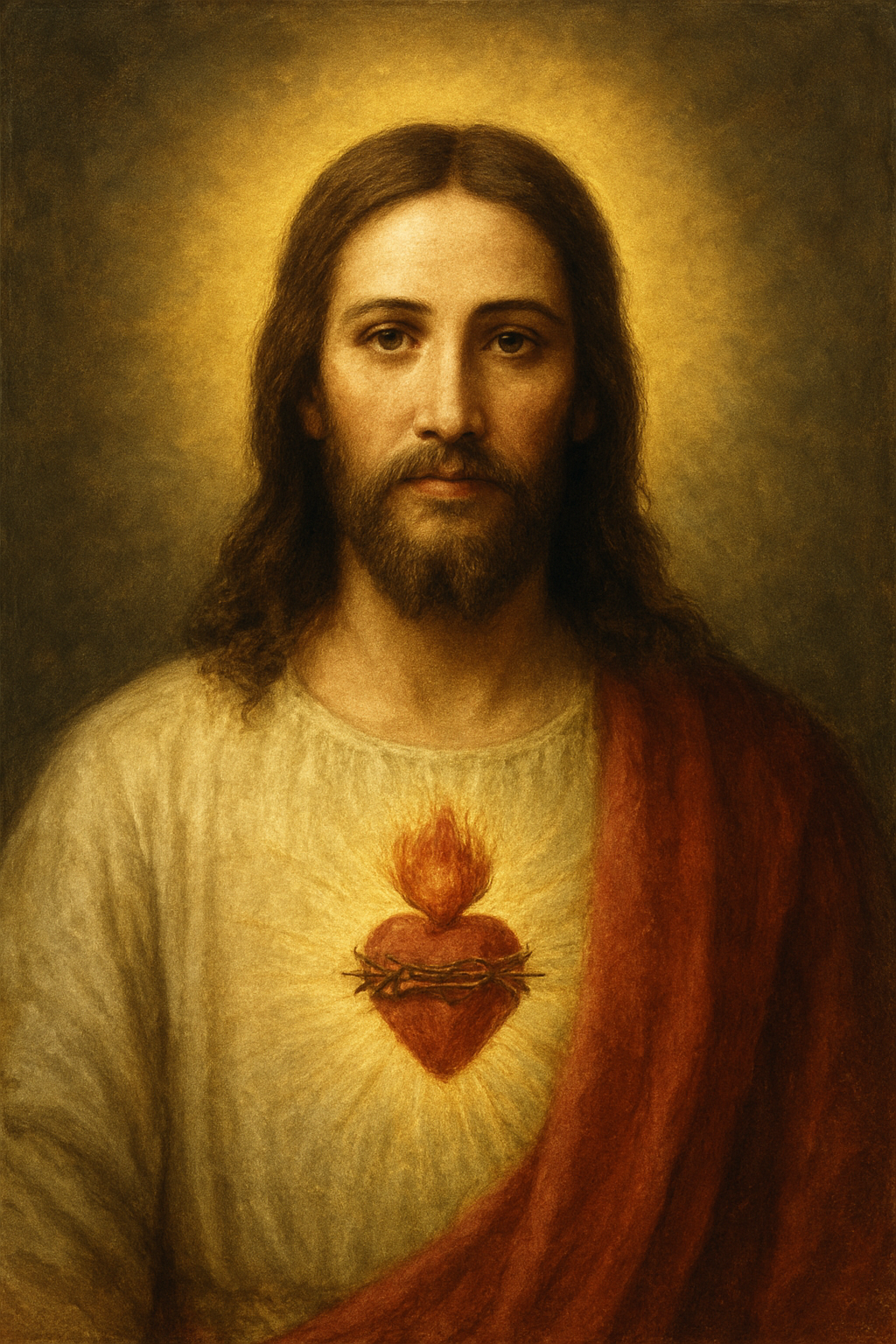
Here the mystery deepens: the human heart, created as the meeting place of love for God and love for neighbor, finds its fullest meaning in the Sacred Heart of Jesus — wounded, yet inexhaustibly life-giving.

Mystical Meaning

Theologians and mystics across the centuries have contemplated this truth:

The vertical beam reaches upward, symbolizing our soul’s longing for God.

The horizontal beam stretches outward, symbolizing self-giving love for others.

The heart at the center is where these two loves unite — fulfilling Christ’s command: “Love the Lord your God with all your heart… and love your neighbor as yourself” (Matt. 22:37–39).

Thus the cross is not only a historical event, nor merely a piece of wood — it is a mystical sign built into the very shape of our existence. Our bodies themselves whisper the Gospel: that love is central, that relationship with God and neighbor must meet in the heart, and that redemption flows from the pierced heart of Christ.

Conclusion

The Cross reflects the human body, with the heart at its center — the meeting place of heaven and earth. It is the eternal blueprint of love, the true Tree of Life, bearing the pierced Heart of Christ from which eternal life flows.

The cross mirrors the human body, and the heart being at the intersection is a holy symbol of how Christ’s love on the cross is the meeting point of heaven and earth.

The cross is the true “Tree of Life” — and its fruit is the pierced Heart of Christ, from which eternal life flows.

Contact

Nzioka Victor Katua

+254708963044

nziokavictorkatua@gmail.com